If you’re serious about music production, picking the right set of speakers is a game-changer. Good speakers let you hear your mixes clearly and help you pick out even the tiniest details, which can make or break your final track. I know as someone who’s spent plenty of hours tweaking mixes, having the right monitoring setup just saves a ton of frustration. It really gives a boost to your confidence in your sound, letting you create with fewer second guesses.
Why Monitor Speakers Matter for Music Production
Studio monitors are made to serve up a more accurate, uncolored sound compared to typical home speakers. In music production, hearing the real deal lets you spot problems like muddied bass or harsh highs before your song sees the light of day. The music you make on high-quality monitors will probably sound the way you intended, whether it’s being played on a top-of-the-line sound system or a cheap pair of earbuds.
This becomes even more important because every studio space colors your audio a bit. High-quality monitors help you work with as few distractions or misleading boosts as possible. If you want your songs to sound great everywhere, investing in proper studio monitors is something you definitely won’t regret.
What Kind of Speakers for Music Production?
When it comes to music production, studio monitors are the standard. These are different from HiFi speakers, which might add warmth or color but can easily hide flaws in your mix. Studio monitors aim for a flat, accurate sound—they don’t juice up the highs or lows just to wow you. This makes them useful for hearing the truth in your recordings. Some of the main types include:
- Active Monitors: These come with built-in amplifiers and only need a linelevel signal. They’re really convenient for home setups and project studios.
- Passive Monitors: You’ll need a separate amplifier with these. While less common in modern home studios, some purists still love them.
Most people starting out will choose active monitors. They’re easy to set up, compact, and get you reliable results right out of the box. Brands like KRK, Yamaha, and Kali Audio are favorites since they bring clarity without emptying your wallet.
Key Features to Look For in Studio Monitors
Before making a decision on new monitors, I always keep certain features in mind for my music workspace:
- Frequency Response: Go for speakers that reach from deep lows to crisp highs. A wide response means catching more detail and errors in your work.
- Size: In small spaces, fiveinch woofers keep things clear and tight. For bigger rooms or when you want more punch in the bass, go for seven or eight inches.
- Connectivity: Balanced XLR or TRS inputs cut down on buzzing or hum. Some monitors even include Bluetooth or digital connections these days.
- Room Adjustments: Some models come with EQ knobs to tweak the monitor sound for your space—which is good if your room isn’t perfectly treated.
I also find that reading hands-on reviews and even auditioning monitors in-person if you can makes a world of difference. Monitors all have their own feel, and what’s perfect for someone else might not be right for you.
Popular Recommended Studio Monitors
Finding the best monitor for your situation depends on your budget, your room, and the way you like to work. Here are some go-to choices that always get love in the music community:
- Yamaha HS5/HS7: These are famous for their honest, flat sound. With no huge bass boost, you can catch mix snags fast.
- KRK Rokit 5/7: Beginner-friendly with punchy mids and lows that still keep things clear. They’re awesome for electronic and hip hop production.
- JBL 305P MkII: Offers a lot of fine detail and accuracy for the price. A favorite for budget-conscious producers who care about quality.
- Adam Audio T5V/T7V: Their ribbon tweeters deliver sparkling, detailed highs. Terrific for mixing vocals and acoustic recordings.
- Kali Audio LP6: They serve up a detailed response with handy room-tuning options. Ideal for bedrooms or smaller studios.
When checking out new speakers, play some songs you know backwards and forwards. If you spot details or tiny flaws you missed before, you’ll know your monitors are telling you the truth!
What is the 38% Rule Speaker?
The “38% rule” isn’t about a particular type of speaker; it’s a guideline for figuring out the best listening spot in your studio. Place your ears about 38% of the way into your room, starting from the wall behind your monitors. This position usually gets you the smoothest bass response, avoiding most peaks and dips that happen from bass buildup. Using this rule can help your mixes sound more consistent—especially if your studio room doesn’t have a lot of acoustic treatment.
Remember, even moving your desk or speakers a few inches can change what you hear. When you combine the 38% placement rule with basic treatment like bass traps and acoustic foam, you make the most of your studio monitors.
The Best Speaker for Sound Quality
This is where opinion and budget play a big role, but there are some heavy hitters in the world of studio monitors that are always in the conversation for top sound quality. If I had to name a few classic workhorses among music producers and engineers, it would be:
- Genelec 8030C: Known for crazy detail and legendary build quality. They’re a staple in pro studios for a reason.
- Focal Shape 65: Delivers a wellbalanced, natural tone with super tight lows and smooth, clear highs. Great for critical listening and mixing.
- Neumann KH 120: Praised for their precision and depth. Every sound in your mix is easy to pick out, so you never lose track of the details.
A quick heads up—even the fanciest, priciest monitors will only sound as good as the room you use them in. If you treat your studio right and place your speakers with care, you’ll get the most honest, revealing sound possible.
What are the Best Studio Speakers?
Studio speakers, also called studio monitors, are the heart of any music creation setup. The ideal choice depends on your skill level, your musical needs, and your spending limit. Here’s what people usually pick at different price points:
- Budget Pick: JBL 305P MkII or PreSonus Eris E5 are hard to beat for clarity that doesn’t cost much.
- MidRange: Yamaha HS7 or Adam Audio T7V bring more power and step-up clarity for the serious hobbyist.
- Pro Tier: Neumann KH120, Focal Shape 65, and Genelec 8030C are top picks for folks ready to put in pro-level work—the kind of monitors that show you everything happening in your mix.
It’s worth stressing: amazing music comes from knowing your gear. Learn how your monitors sound on their own. Make reference tracks, double check your mix on headphones, and even play it in your car or on a bluetooth speaker. The more you compare, the more your mixes will start to work everywhere.
Troubleshooting Common Issues in Studio Monitor Setups
Even with great monitors, certain issues crop up for almost every home studio:
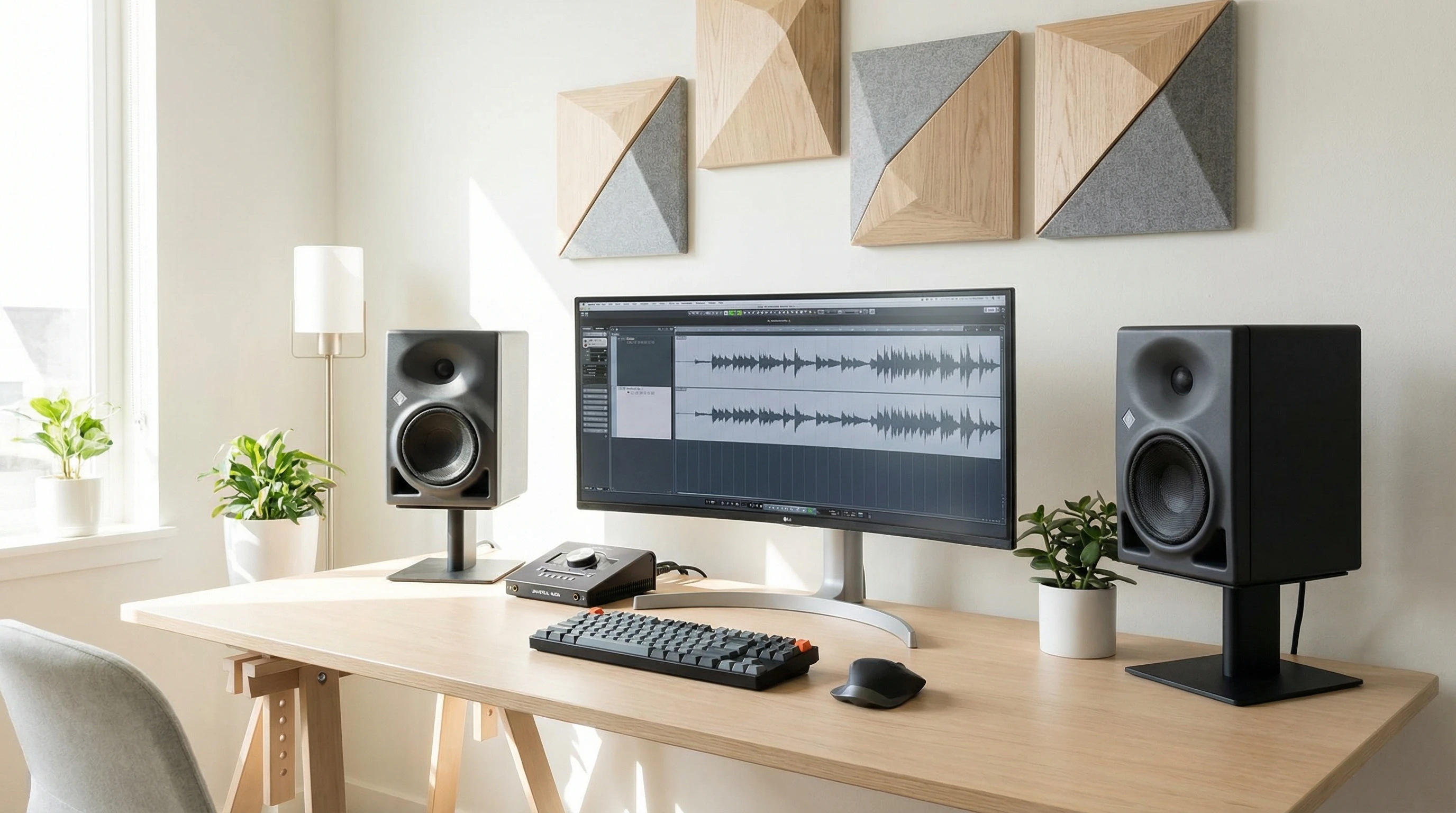
- Room Reflections: Flat, hard walls bounce sound, changing what you hear. Hang up curtains, add a rug, or put soft furniture and acoustic panels around to break up those reflections and get a truer mix.
- Bass Buildup: Pushing your monitors right against a wall often makes bass muddy or overwhelming. Give your monitors at least a foot of space and remember to follow the 38% guideline for your chair placement.
- Poor Speaker Placement: Your monitors should form an even triangle with your head. Each speaker points toward you at the same angle, with your seat being one point and the two monitors as the others. This helps get the most consistent stereo image and clarity.
It took me time and tinkering to really see just how much speaker placement and simple treatment changed my mixes. Once it clicked, my mixes started sounding way more consistent inside and outside the studio.
Frequently Asked Questions
Here are some things people check in about—these are the questions and answers I see most often about studio monitors:
Question: What kind of speakers for music production?
Answer: Go for studio monitors with a flat, transparent response. Active studio monitors are the go-to for home setups. Yamaha, KRK, Kali Audio, Adam Audio, and JBL are some solid brands.
Question: What is the 38% rule speaker?
Answer: The 38% rule just means putting your listening spot 38% into your studio’s length, starting from the wall behind your monitors. This isn’t about a certain speaker, but a way to get a more balanced bass response and truer mixes.
Question: What is the best speaker for sound quality?
Answer: Genelec 8030C, Focal Shape 65, and Neumann KH120 are industry favorites for their clarity and revealing sound. They might cost more, but they can really let the details in your tracks shine through.
Question: What are the best studio speakers?
Answer: For most producers, JBL 305P MkII or Yamaha HS5/HS7 are popular for a reason. If you want to treat yourself to pro-grade gear, Neumann KH120 and Genelec 8030C are classic choices heard in studios worldwide.
Wrapping Up: Getting the Most From Your Studio Monitors
When it comes to picking the best speakers for music production, it’s all about knowing your room setup, your creative needs, and what you can spend. A pricey set of monitors won’t fix a bad setup or an untreated room, but a good pair used carefully will make every listening session more honest and rewarding. Spend time on speaker placement and acoustic treatment, get used to how your monitors sound, and trust your own ears. Whether you’re remixing, recording, or just jamming for fun, quality monitors will give a boost to your music adventures every time you hit play.